Kinds of robot vacuum
- Robot vacuum: maps the house, vacuums carpet and hard flooring on its own route, then heads back to its dock to recharge.
- Robot vacuum and mop: adds a water tank with a pad or roller, so the hard areas get wiped during the same outing.
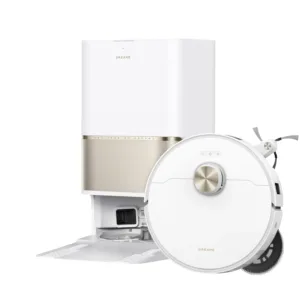
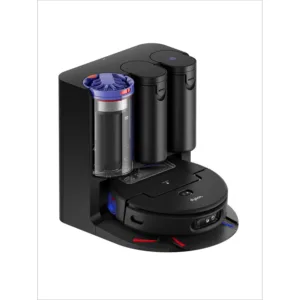
- Self-emptying robot: docks on a base, bagged or bagless, that pulls the dust out of its bin. Some bases also wash and dry the mop.
- Camera-guided robot: uses a camera alongside its other sensors to steer round obstacles, and on some, to pick out stains that need a second pass.
Not after a robot? Every other type of vacuum is under floorcare.
What a robot actually does
| Job | How it works | Worth checking |
|---|
| Vacuuming | It leaves the base, works across the floor in a planned route and goes back to charge. Side brushes sweep dirt out of corners and edges. | How it navigates and what the app lets you control. |
| Mopping | A small water tank and pad let it wipe tile, laminate and sealed wood as it goes. | Whether you fit the pad each time and how it's washed. |
| Self-emptying | At the base, its little bin is sucked into a much bigger container that you empty every few weeks. | Bag or bagless, and how much floor the base takes up. |
| Scheduling | Set a timetable on your phone and it cleans while you're out. | That your Wi-Fi reaches where the base will sit. |
Making the choice
Mapping and navigation
A mapping robot cleans in tidy lines and remembers where it has been. With a saved map you can send it to one room or fence off places to avoid, such as the pet bowls or a rug with tassels. Each product page describes the navigation system and the app's controls.
Vacuum only, or mop as well?
Mopping suits homes with plenty of hard floor. It lifts light marks and the film of dust that settles on tiles, but it's no substitute for a proper wash when something has dried on. You fill the tank and fit the pad when you want it to mop, then rinse the pad afterwards.
The base matters most
A self-emptying base is what makes a robot feel genuinely hands-off. A bagless base leaves you nothing to keep buying, while a bagged one keeps the dust sealed away. Either way it sits out on the floor permanently, so check its size.
Battery and floor area
Compare the run time with the area you want cleaned. Many robots head back to recharge when the battery gets low and then pick up where they left off, so a big floor just takes longer.
Pets
Robots are good at keeping daily shedding under control. Hair does build up around the main and side brushes, so expect to cut it free now and then.
Getting your home ready
- Find a spot for the base. It needs a socket, level flooring and some clear space in front and to each side so the robot can dock.
- Check the Wi-Fi. Setting up, mapping and scheduling all happen in a phone app, so the signal has to reach the base.
- Pick things up first. Charging leads, socks and small toys stop a robot in its tracks. A quick tidy beforehand saves you rescuing it.
- Look at door bars and rugs. Low thresholds and short pile are fine; tall door strips and deep rugs can defeat it.
- Keep another vacuum for the stairs. Sensors stop the robot falling, but it can't climb. A cordless or upright vacuum handles stairs and deep cleans.
The brands we sell
Our robot vacuums come from Dreame, Dyson and Shark. Each is controlled through its maker's app, so it's worth judging the app alongside the hardware.
Buying a robot vacuum from KDH Electrical
Every robot is protected by the manufacturer's UK guarantee. We deliver free on baskets over £600, with most orders arriving within 3–7 working days.
Seen a lower UK price? Our price match could bring ours down to it. Talk to us on 01622 541312, or arrange a visit to our showroom in Rochester by calling first to ask what's on display.